Sicily: Chapter 8 - Trapani & Erice
Buonasera!
Following our awe-inspiring visit to Agrigento and the Valle dei Templi, we had a travel day to reach our next destination. The route we took meandered northwest along the coast, first to Marsala, the westernmost part of Sicily and then on to our final destination, Trapani.
Marsala is known for its wine of the same name and is famous as the landing spot for Giuseppe Garibaldi and his army of 1000 volunteers as they began their conquest of Sicily in 1860.
Another feature of the area between Marsala and Trapani is the Stagnone Lagoon Natural Reserve – a marine area with salt pans. What's a "salt pan" you say? Here's a definition provided by ChatGPT:
"Salt pans, also known as salt flats or salt plains, are flat expanses of land, often found in arid regions, covered with salt and other minerals. They are a natural source of salt, which has been harvested for centuries."
Here's an artistic photo of the salt pans, taken from "VisitSicily" promotional literature.
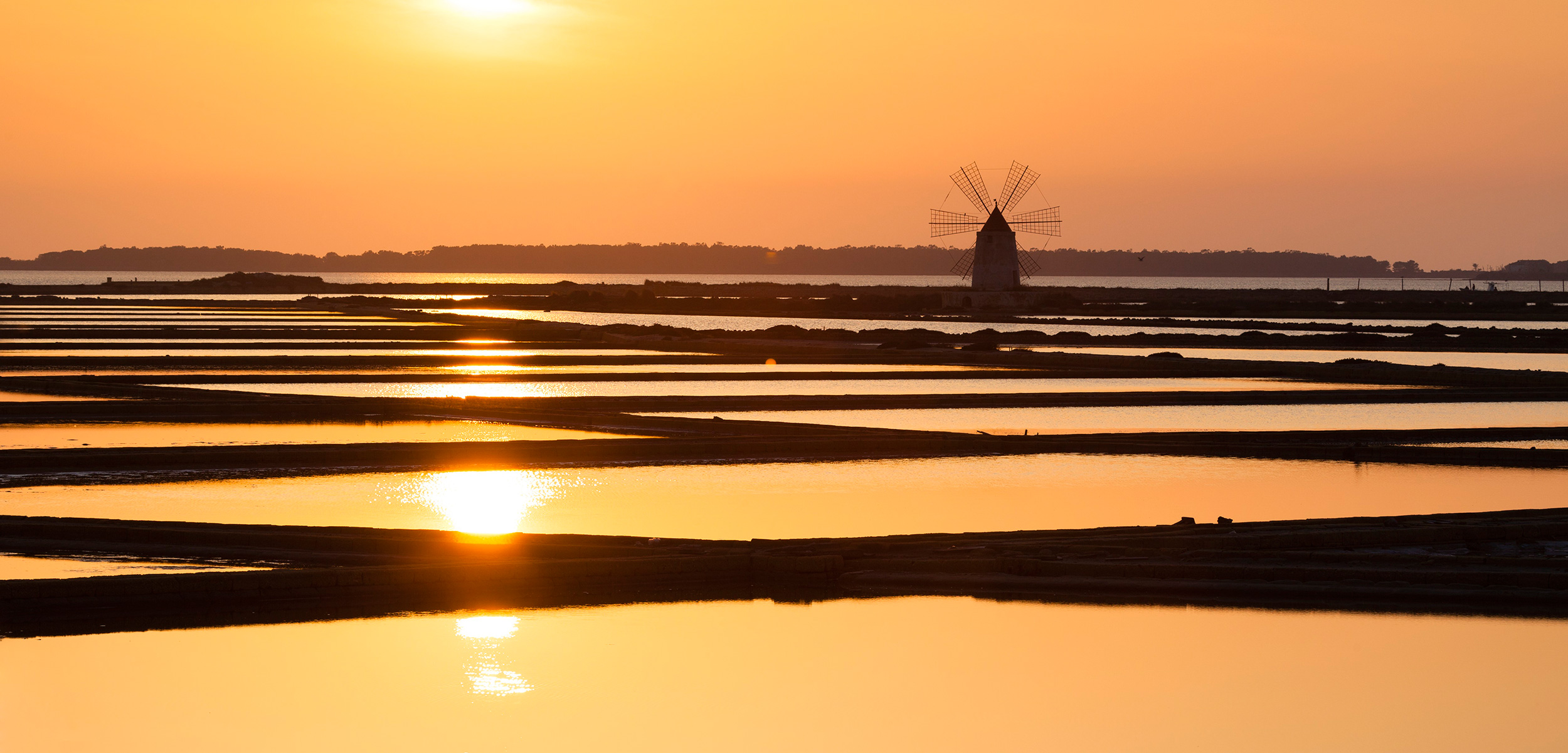
These Sicililan salt pans are particularly old as they have been providing natural salt for over 2700 years. It has been used over the centuries as a way to preserve food.
The pic below includes the windmill and factory, where the salt is broken down and processed.

From Marsala, we drove north to the charming city of Trapani. We found a parking spot just outside our AirB&B - what luck! - and decided that we should have a stroll to stretch our legs.


Here are a pair of photos from the very peaceful Town Hall Park.
The statue is in honour of Piersanti Matarella, who was the President of the Regional Government of Sicily. The commemorative notes state that he was assassinated by the Mafia. It is one of the few open references to the Mafia that we noticed while in Sicily.


After our walk, we were famished. So we took the advice of our AirBnB hostess to try her favourite pizzeria - Pizza Gourmet. Here's Jenn with more new friends!

The next day was dedicated to visiting Erice, dubbed as "one of the most beautiful villages in all of Italy". It was founded on the mountain top (750 metres high) in the 5th century BCE, well before the Greeks arrived in Sicily. It is noted for its spectacular vistas, castles, churches and restaurants.
In planning for this part of our trip, we were advised to take the cable car from Trapani all the way up to the top of the mountain so that we didn't have to drive. Unfortunately, when we got to the station, we found that the cable car had not yet opened for the season.
Uh-oh...what now? Yep, you guessed it. WE DROVE!! I still hyperventilate just thinking about it. I think it was worse than the Amalfi Coast - that experience was just sitting on a bus!!! But this was me, actually driving, being responsible for the lives of three people, on roads that had little to-no-guard-rails.
I WILL NEVER DRIVE LIKE THAT AGAIN!!!!!
Deep breaths, deep breaths, deep breaths....
...okay, okay, okay - I think I'm good to continue


Comments
Post a Comment